
Mary Shelley’s Frankenstein; or, The Modern Prometheus is often misunderstood as a simple horror story. In reality, it is a tightly constructed philosophical novel that explores creation, responsibility, isolation, and the consequences of unchecked ambition. Written when Shelley was just eighteen, the book remains one of the most enduring and relevant works in English literature.
The novel is framed through a series of letters and first-person accounts, beginning with Arctic explorer Robert Walton, whose dangerous pursuit of discovery mirrors the obsession at the heart of the story. Walton encounters Victor Frankenstein, a brilliant but haunted scientist who recounts his tragic past. Victor’s ambition drives him to create life itself—but once his experiment succeeds, he recoils in horror from what he has made.
The creature, often mislabeled as “Frankenstein,” is one of literature’s most complex figures. Intelligent, sensitive, and deeply lonely, he is not born a monster but becomes one through rejection and abandonment. Shelley forces the reader to confront uncomfortable questions: Who is truly responsible for evil acts? The creator who abandons his creation, or the creation that is denied compassion and guidance?
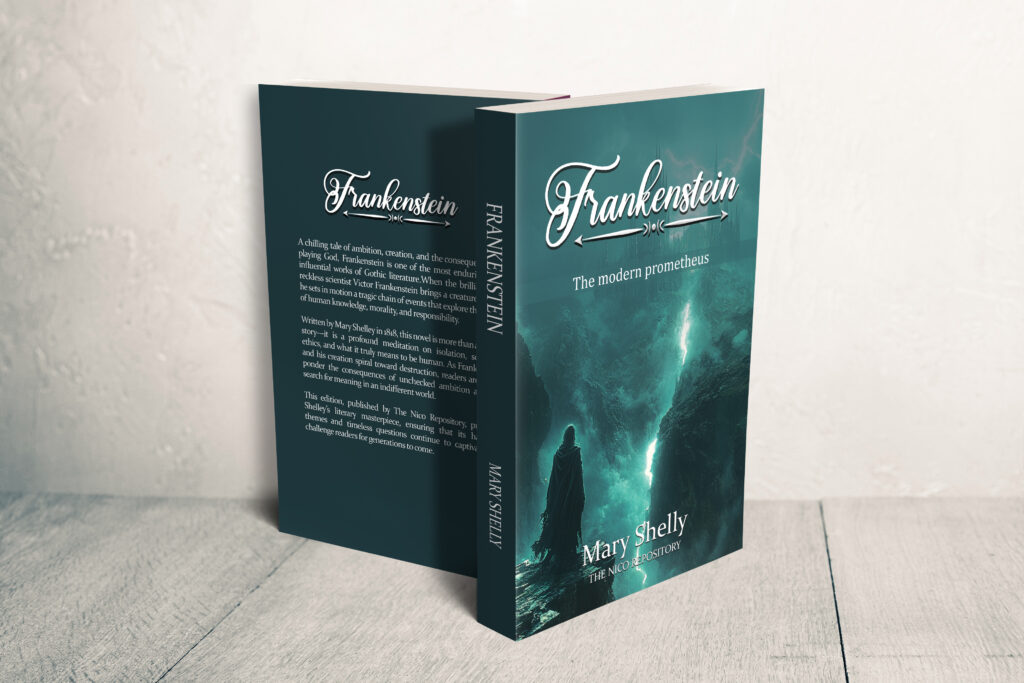
Unlike many later adaptations, the novel emphasizes emotional and moral consequences rather than spectacle. Victor’s refusal to take responsibility sets off a chain reaction of suffering that affects everyone around him. His pursuit of knowledge without ethical restraint becomes a warning about science divorced from humanity—a theme that feels increasingly modern in an age of rapid technological advancement.
What gives Frankenstein its lasting power is its balance of narrative drive and philosophical depth. It is a compelling story, but also a meditation on what it means to be human, to belong, and to create. Shelley does not offer simple villains or heroes; instead, she presents a tragedy shaped by pride, fear, and moral failure.
For readers interested in classic literature that still speaks directly to modern concerns, Frankenstein is essential reading. Owning a quality edition allows you to return to its ideas, reconsider its characters, and experience the novel beyond simplified pop-culture versions.
You can purchase Frankenstein; or, The Modern Prometheus directly from The Nico Repository here:
👉 Frankenstein Book
This is not just the origin of science fiction—it is a timeless novel about responsibility and consequence, and one well worth adding to your library from The Nico Repository.
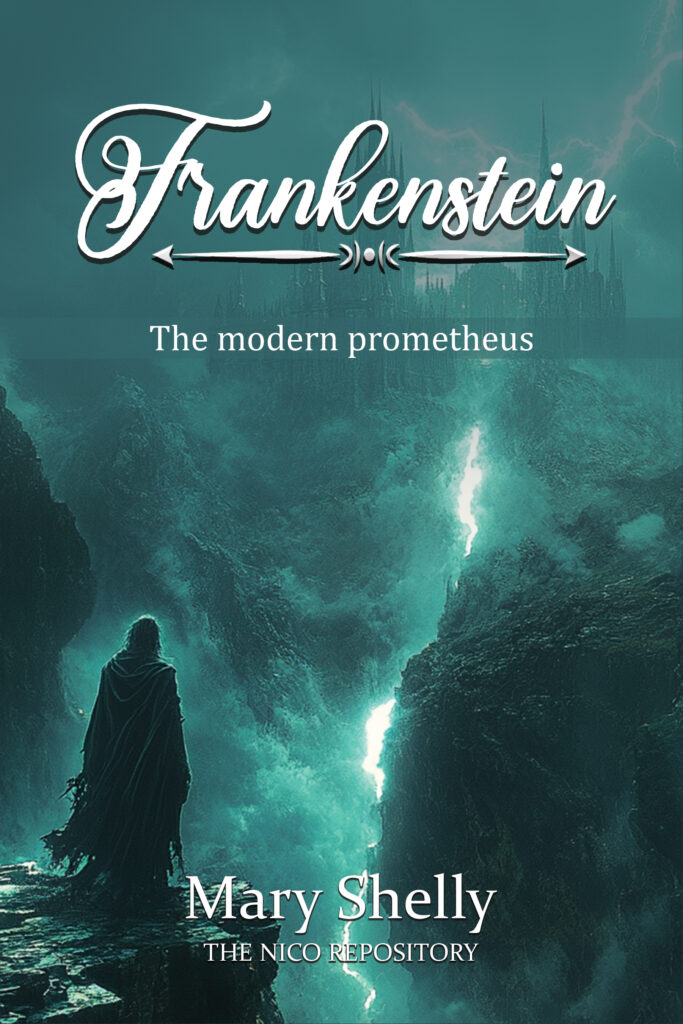
Frankenstein: Or, The Modern Prometheus
A gripping tale of ambition, science, and the consequences of playing God, Frankenstein follows Victor Frankenstein as he creates life and confronts the horrifying results. A timeless classic exploring human nature, ethics, and isolation.